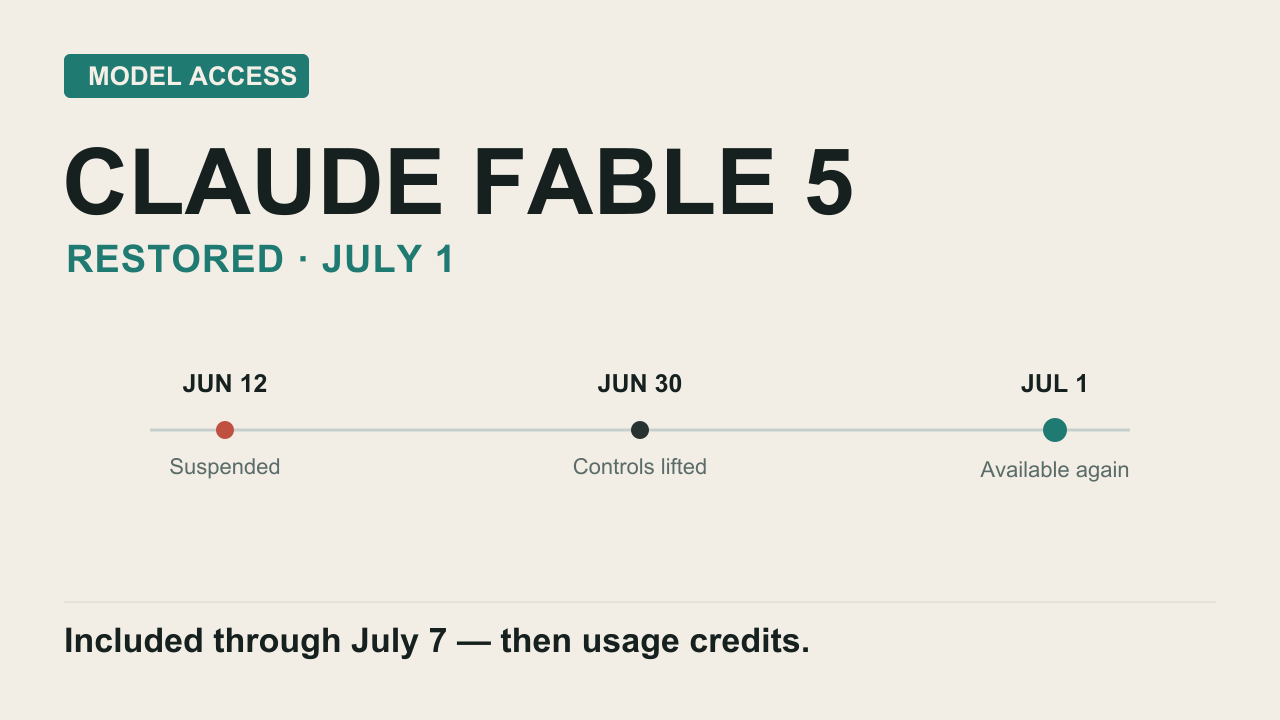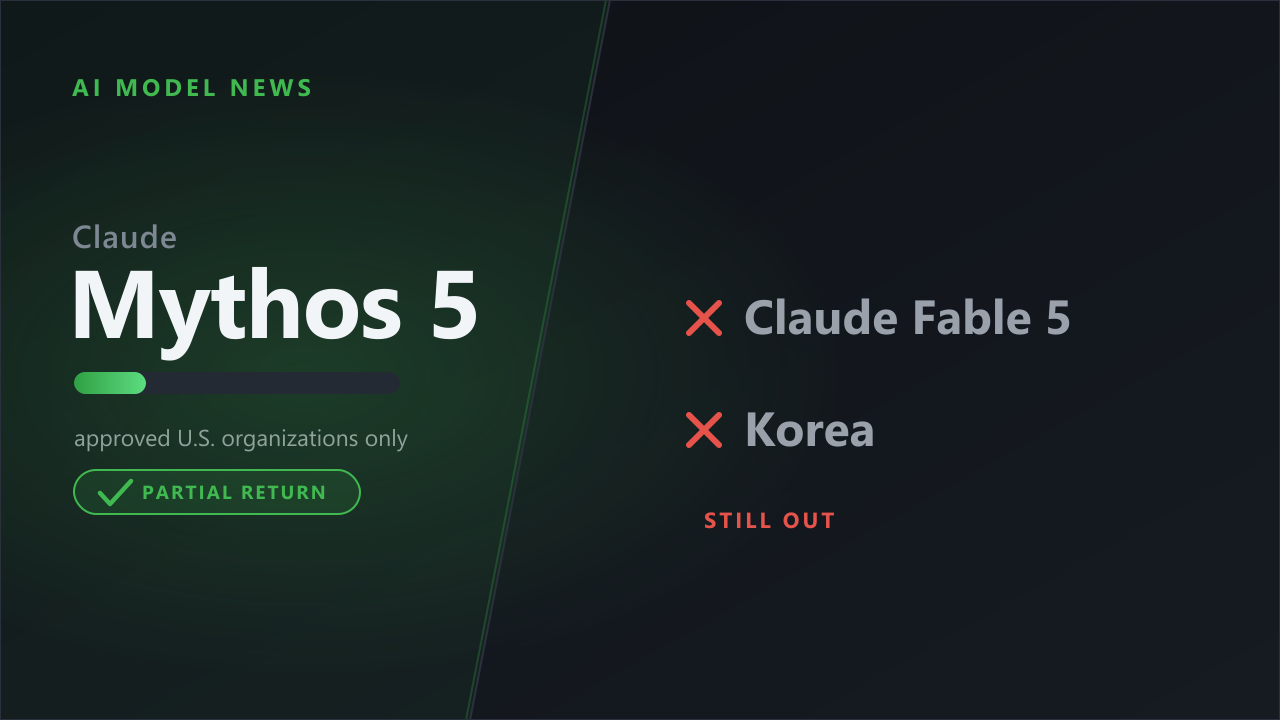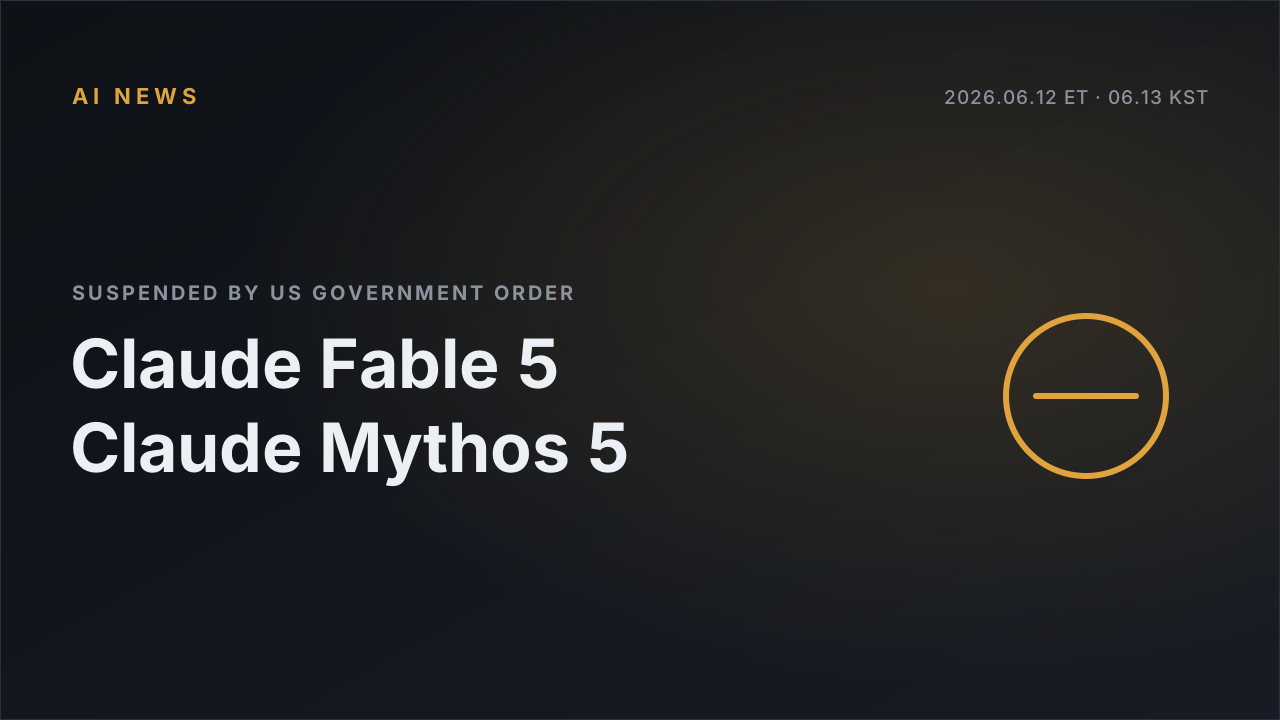
On the evening of June 12, 2026 (U.S. Eastern Time) — the morning of the 13th in Korea — users lost access to a model that had been publicly released three days earlier. Anthropic said it had cut off access to Claude Fable 5 and Claude Mythos 5 for every customer worldwide. The move followed an export-control directive from the U.S. government.
What happened
The timeline runs as follows.
- Early April (April 7) — Anthropic announced Project Glasswing and began offering its first Mythos-class model, Claude Mythos Preview, on a limited basis to a small set of vetted partners (about 50). It was not a public release; only selected organizations in the security and infrastructure fields used it, and by early June it had expanded to about 150 organizations across more than 15 countries.
- June 9 — Anthropic publicly released Claude Fable 5, the first Mythos-class model anyone could use. It released Claude Mythos 5 the same day, but that one remained limited to Glasswing partners.
- June 12, 5:21 p.m. ET — Anthropic received an export-control directive from the U.S. Department of Commerce. It instructed the company not to give foreign nationals access to the two models. That covered Anthropic's own foreign-national employees as well, whether inside or outside the United States.
- Shortly after — Anthropic blocked Fable 5 and Mythos 5 for every customer worldwide. Other Claude models remained available.
What the two models are
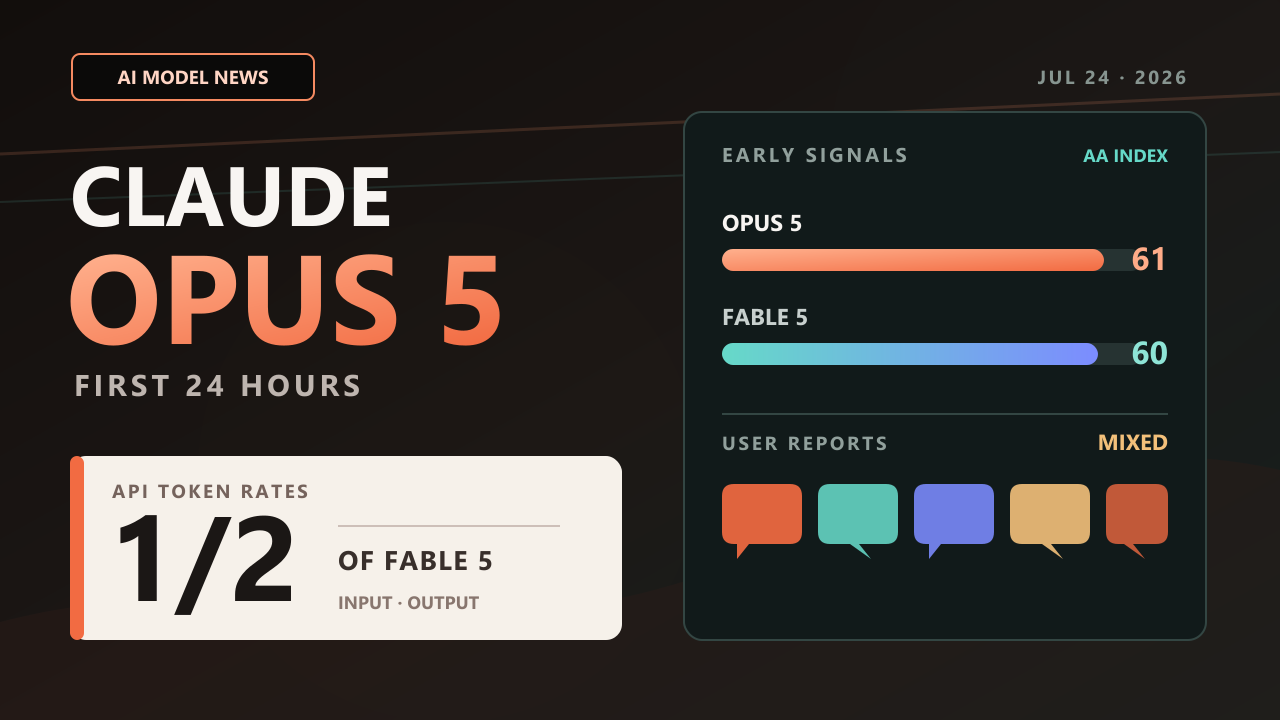
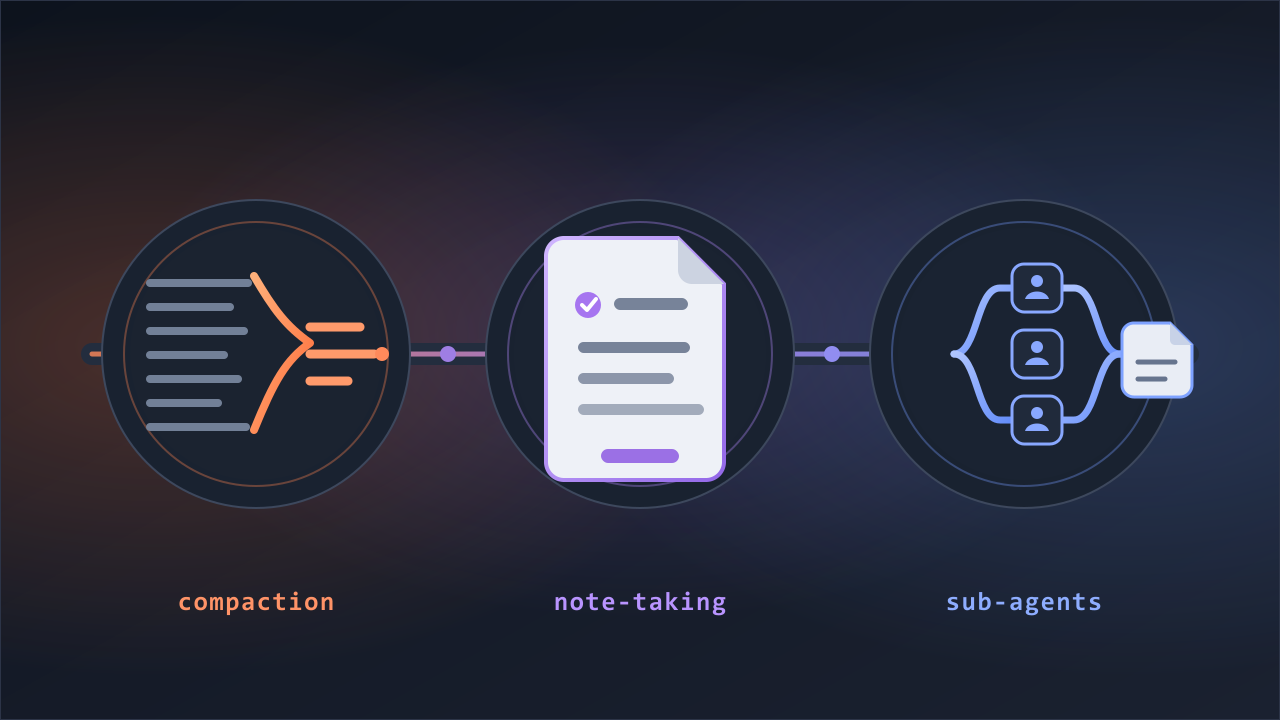
Fable 5 and Mythos 5 are what Anthropic calls Mythos-class models, a tier above its own Opus class. Anthropic said Fable 5 was "the most powerful model it has made publicly available." It works autonomously for longer than earlier Claude models, holds up to 1 million tokens of context, and refines its results using notes it leaves itself. At launch, Anthropic cited the payments company Stripe, saying the model completed work on a 50-million-line codebase in a single day (Anthropic's figure, not independently verified).
The two are in fact the same model. By Anthropic's account, "Mythos 5 is the same model as Fable 5, but with safeguards removed in certain areas," and those safeguards are exactly what separate them.
- Fable 5 (public) — When a classifier detects a request in one of three areas — (1) cybersecurity, (2) biology and chemistry, and (3) model distillation (an attempt to train another model on this model's output) — Claude Opus 4.8 handles the answer instead. The user is notified each time. Anthropic said that in more than 95% of all sessions this rerouting does not happen, and that in those sessions Fable 5's performance is effectively the same as Mythos 5's.
- Mythos 5 (limited) — This is the version with those safeguards stripped out. Anthropic lifts the cyber restrictions for Glasswing partners and the biology and chemistry restrictions for some biology researchers, providing it only to vetted organizations.
Why both models went down
The directive targeted foreign nationals. Anthropic blocked both models in full. The company said it could not screen millions of users by nationality in real time, so the only way to comply was to take both models down.
That said, Bloomberg reported that the non-public research version (Mythos Preview), which had been offered to a small number of partners before launch, remained with some companies, including Cisco Systems and Dragos, even after Anthropic blocked the public versions. Anthropic did not say on what basis it left those in place.
What Anthropic said
In an official statement, Anthropic said it views the move as stemming from a misunderstanding and that it would restore access as soon as possible.
According to Anthropic, the government did not give a specific reason in writing. The company said it understands the issue to be a "jailbreak" that bypasses Fable 5's safeguards, and described the method this way:
asking the model to read a specific codebase and fix any software flaws
The company said the vulnerabilities surfaced this way were already-known minor ones, at a level that other public models can find without any bypass.
What's a first here
As far as is known, this is the first time a deployed commercial AI model has been pulled from public use by government action. Until now, export controls aimed at AI have mostly targeted hardware such as chips. This time was different: the controls restricted access to the model itself.
Since then
The backlash was fast. About 150 security experts — among them Alex Stamos, the cybersecurity authority who led security at Yahoo and Facebook — signed an open letter within days demanding the government reverse the move. Stamos put it this way:
There was a speeding ticket, and they gave Fable the death penalty.
Fortune and others reported that in Europe, amid a sense of urgency that infrastructure held by another country can be cut off at any time, debate over "sovereign AI" — the idea that each country should have its own AI — had reignited.
Anthropic said it is in negotiations with the government, but as of June 22 there is no official announcement of a resumption date. We'll report more as there's news.
Sources
- Anthropic: Statement on the US government directive to suspend access to Fable 5 and Mythos 5
- Anthropic: Claude Fable 5 and Claude Mythos 5
- Anthropic: Project Glasswing
- Anthropic: Expanding Project Glasswing
- Bloomberg: Early Users of Anthropic Mythos Still Have Access After US Order
- Fortune: Anthropic disables Fable and Mythos AI models after U.S. export controls
- Lawfare: A Kill Switch for Frontier AI
- NBC News: Inside the Trump administration scramble that forced Anthropic's most powerful AI model offline
- Fortune: Anthropic shutdown ignites calls for sovereign AI across Europe
- TechCrunch: Cybersecurity vets protest 'dangerous' US government ban